

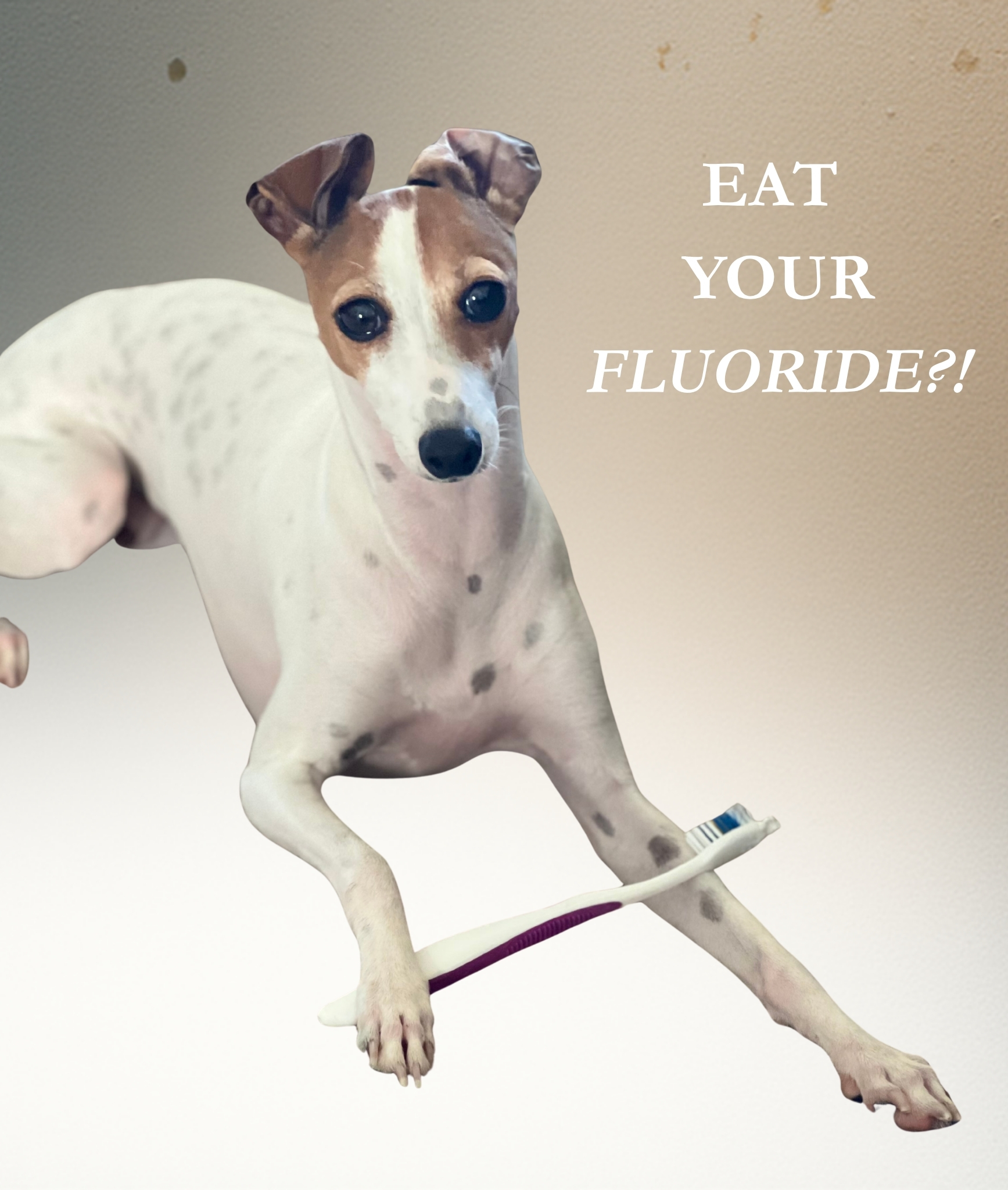
Meet Mare, Bayway Dental’s therapy dog.
When most of us hear the word “fluoride”, we think about toothpaste.
But did you know that fluoride also occurs naturally in a variety of foods and drinks?
Fluoride, like many minerals, naturally occurs in our environment – in plants, soil, water – and many of the foods we eat.
What Does Fluoride Actually Do for Your Teeth?
The way fluoride protects teeth is through frequent, low-level exposure in the mouth. This strengthens and remineralizes tooth enamel throughout the day, protecting your precious teeth from decay. Just a little exposure goes a long way to protect your smile. This is exactly why public health experts recommend optimal levels of fluoride in our public drinking water.
But we don’t often talk about the fluoride that naturally occurs in our food and drinks. Unlike nutrients such as iron, zinc, and copper, fluoride isn’t listed on nutrition labels—but that doesn’t mean it’s not in your food.
So, Which Foods Contain Fluoride?
Many foods we eat contain trace amounts of naturally occurring fluoride. However, some foods and beverages have considerably more than others and are worthy of mention.
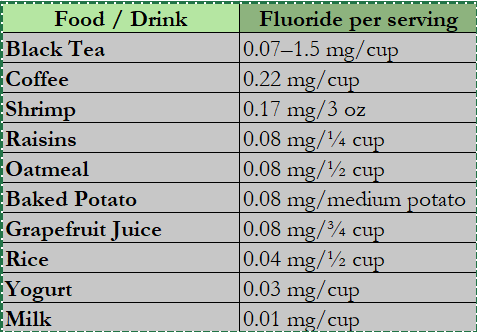
See our selections on this table below:
1. COFFEE & TEA

Coming in at the top is everyone’s favorite morning drinks. Who knew?
Coffee and Tea are some of the richest dietary sources of fluoride!
Since tea and coffee plants naturally absorb fluoride from the soil as they grow, these tasty brewed beverages can contain significantly more fluoride than most other foods.
According to the National Institutes of Health, brewed black tea can contain up to 1.5 mg of fluoride per cup, depending on the type of tea, where it was grown, and how it was prepared. Note, that level in a single cup of tea would be roughly 10x the amount in a cup of water with optimal water fluoridation levels (a level that was lowered to 0.7ppm in 2015).
Now this doesn’t mean you need to start drinking tea or coffee specifically for your teeth, of course. However, unsweetened, these morning ritual drinks can be a healthy choice. Unlike sugary drinks, they won’t continually bathe your teeth in sugar (which we know contributes to cavities).
2. SEAFOOD – ESPECIALLY SHRIMP
Seafood naturally contains fluoride. The fish and shellfish we eat get their fluoride from the ocean water they live in. In fact, the NIH lists approximately 0.17 mg of fluoride in a 3-ounce serving of canned shrimp.
Seafood can be an excellent addition to a healthy diet because it provides protein and, in many cases, beneficial nutrients such as omega-3 fatty acids.

3. RAISINS
Raisins contain a small amount of fluoride. A quarter-cup serving contains approximately 0.08 mg of fluoride, according to the NIH.
However, there’s an important dental consideration here: raisins are sticky, concentrated sources of naturally occurring sugar. When most of the water evaporated from those grapes to make raisins, we get a concentration of sugar – and fluoride!
Given their sugar content and a sticky texture that can adhere to your teeth, raisins are not necessarily a better snack choice over something like fresh fruit.
4. OATMEAL
Oat flakes and whole grains naturally absorb minerals, including fluoride, from soil and water as they grow. In fact, a half-cup of cooked oatmeal contains approximately 0.08 mg of fluoride.
Oatmeal is also a great example of why the fluoride content of a food isn’t always entirely attributable to the food itself. Keep in mind that any food prepared with fluoridated water can contain additional fluoride.
5. POTATOES
A medium-sized baked potato contains approximately 0.08 mg of fluoride.
Potatoes are a nutritious source of carbohydrates and several vitamins and minerals. Choosing a baked potato over a sugary snack can be part of an overall smile-friendly diet.
The Bigger Picture: Fluoride & Healthy Eating
It’s important not to think of fluoride-containing foods as a way to “get enough fluoride.”
Keep in mind that fluoridated drinking water and toothpaste are more effective sources of fluoride for cavity prevention.
As a reminder, a strong cavity-prevention routine looks like this:
Brush Twice per Day with Fluoride Toothpaste.
Toothpaste delivers fluoride directly to the teeth and is one of the most effective everyday tools for preventing cavities.
Drink Water Daily.
Although Florida recently passed laws prohibiting local communities from adding fluoride to their public water supplies, most communities outside of Florida still provide tap water that provides the protective benefits of frequent, low-level exposure to fluoride.
Florida’s law means communities can no longer add fluoride to achieve the recommended concentration, but that doesn’t mean the water contains zero fluoride. Naturally occurring fluoride can still be present, and the concentration can vary considerably. Fluoride levels may be considerably higher or lower than what is optimal now.
As a result, we’re seeing more of our St. Petersburg patients use a daily fluoride rinse after brushing. ACT Fluoride Rinse is a simple, affordable way to get added protection for your smile. This is especially helpful for those who cannot get it from their community water supply.
Regular Dental Visits.
Come see us and we can assess your individual cavity risk. Find out whether you would benefit from additional prescription fluoride treatments or other preventive measures.
As you can see, there are many foods that naturally contain fluoride, but you don’t need to build your diet around fluoride-containing foods (nor are we suggesting that). It helps to understand that fluoride is one piece of a larger oral health puzzle.
A nutritious diet with limited sugar exposure, good oral hygiene, regular dental care, and appropriate fluoride exposure all work together to help keep your teeth strong and healthy.
And remember – your smile deserves a prevention strategy catered just for you. Give us a call to schedule a personalized consultation today!
Call 727-914-2707 Today!
No lectures. No Judgment. Just Care.